

9 Everyday Sayings with Backstories So Weird You’ll Never Use Them the Same Way Again


Introduction
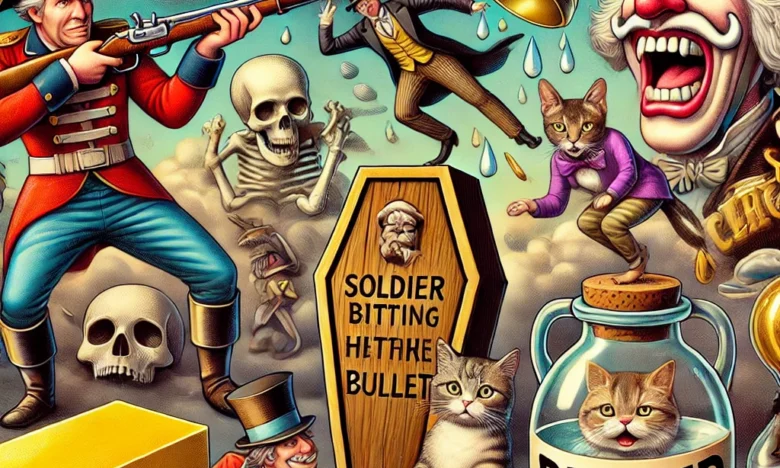
We toss around common phrases every day without a second thought. “Bite the bullet,” “saved by the bell,” “raining cats and dogs”—all perfectly normal things to say… until you realize half of them originated from medieval nonsense, battlefield horror, or straight-up superstitions.
Get ready to question everything you’ve ever said in polite conversation as we dig into the weird, dark, and totally unexpected origins of your favorite phrases. Warning: you might never casually say “break a leg” again without feeling mildly cursed.
1. “Bite the Bullet” – The Original DIY Anesthesia
Backstory: Before modern medicine, soldiers were handed a literal bullet to bite down on while surgeons hacked away at their limbs.
Why This Is Dark: Oh, you thought it was just a quirky phrase? Nope. It’s from the please-don’t-scream-during-this-amputation era.
2. “Saved by the Bell” – Not About Boxing
Backstory: It comes from the fear of being buried alive. Coffins had bells attached with strings leading down to the body in case the “dead” person woke up.
Why This Is Terrifying: Imagine waking up underground, yanking a string, and hoping someone hears your death jingle.
3. “Raining Cats and Dogs” – Blame Medieval Plumbing
Backstory: In the 1600s, storms would flood streets, carrying along debris… including unlucky animals that had fallen from rooftops.
Why This Is Gross: The phrase was literal. Welcome to ye olde weather report: Cloudy with a chance of feline carcasses.
4. “Kick the Bucket” – Goodbye, Cow
Backstory: One theory says it comes from slaughtering animals, where a bucket was placed under them as they were… well… you know.
Why This Is Morbid: Congrats! Next time you say it, you’re invoking the graceful death of a barn animal.
5. “Mad as a Hatter” – Mercury Poisoning, Anyone?
Backstory: 18th-century hat makers used mercury in their work, which slowly poisoned them, causing tremors, hallucinations, and mood swings.
Why This Is Horrifying: It’s less “quirky tea party” and more “toxic workplace tragedy.”
6. “Break a Leg” – Theater’s Curse Prevention
Backstory: Saying “good luck” was believed to jinx a performance, so “break a leg” became the ironic substitute.
Why This Is Unhinged: Only theater people would casually wish physical harm as a sign of support.
7. “Caught Red-Handed” – Bloody Proof
Backstory: In medieval times, if you were caught with blood on your hands after committing a crime (like stealing livestock), that was pretty solid evidence.
Why This Is Awful: It was literal. If you were actually red-handed, straight to jail.
8. “Butter Someone Up” – Ancient Flattery via Dairy Products
Backstory: In ancient India, people would throw butter at statues of gods as a form of flattery.
Why This Is Weird: Next time you’re sweet-talking someone, just imagine hurling a stick of butter at their face for good measure.
9. “Let the Cat Out of the Bag” – Scam Artists at Work
Backstory: Markets sold pigs in sacks. Sneaky sellers would swap out the pig for a cat, and if someone opened the bag early… surprise!
Why This Is Ridiculous: You thought you bought dinner, but congratulations—it’s a stray.
Conclusion
Turns out, everyday phrases are less “fun idioms” and more “nightmares from history.”
So the next time someone says, “Bite the bullet,” you’re fully allowed to respond, “Cool, thanks for reminding me of battlefield dentistry.”
It’s fine. We’ve been casually traumatizing each other through language for centuries.
Vote on your favorite Everyday Saying
Bonus Useless Fact:
A group of porcupines is called a “prickle.”
Somehow that’s both adorable and mildly threatening.
